CMS Web Development for Flexible & Scalable Business Websites
For modern CMS projects we recommend Next.js + Headless CMS (Strapi, Contentful, Headless WP) for speed, SEO and scale.
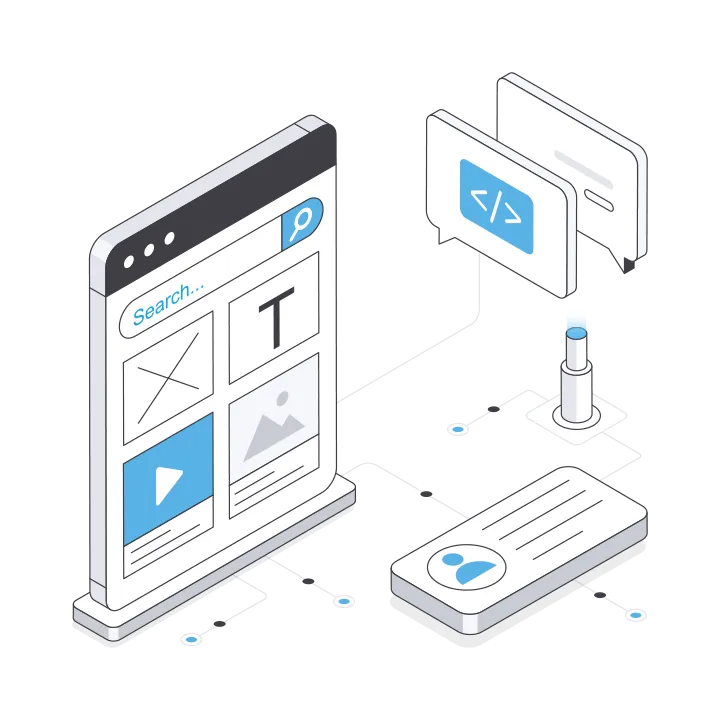
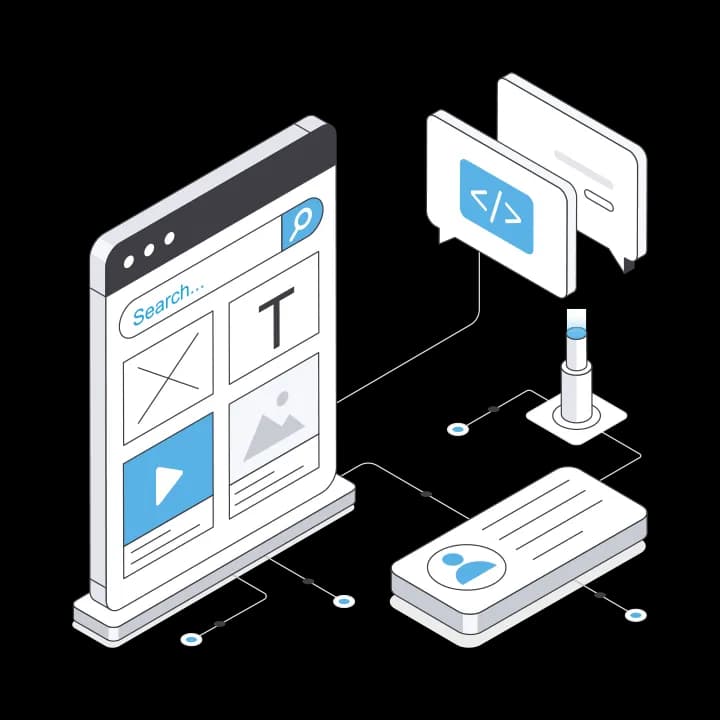
CMS development for scalable content structures
- Content model
Structure instead of page chaos
Content is modelled to stay maintainable and reusable over time.
- Editorial workflow
Easier day-to-day editing
Teams can update content without needing developers for every small change.
- Multilingual setup
Ready for multiple markets
Languages, regions and content variants are reflected cleanly in the CMS structure.
- Headless-ready
Flexible for modern frontends
The CMS can connect to fast frontends, landing pages and digital products.
CMS Web Development for scalable websites, content platforms and editorial workflows
A headless CMS becomes valuable when content is no longer managed only page by page, but needs to be structured, multilingual and reusable across different digital channels. Modern CMS systems such as Strapi, headless WordPress and more help businesses connect editorial workflows, performance and technical scalability.
- Content model
Content needs a clean structure
When pages, components, translations or campaign content become hard to maintain without a clear content model.
- Editorial workflow
Content teams need more independence
When marketing and editorial teams need to edit, approve and publish content faster without blocking development resources for every change.
What we deliver for modern headless CMS projects
Professional CMS Web Development does not start with choosing a tool. It starts with a clear content structure. We support businesses with CMS strategy, platform selection, content modelling, headless CMS development, migration, integration and long-term operations.
Planning a headless CMS that connects editorial workflows, performance and scalability?
We support your CMS strategy, platform selection, content modelling, headless CMS development and migration. Ideal if your content needs to become more structured, multilingual or connected to modern frontends such as Next.js.
- Non-binding inquiry
- Structured content
- Headless-ready setup
Why CMS Web Development only scales with a clear content model
Many CMS projects start with the question of which tool to use. But the long-term success usually depends on how content, components, languages, roles and workflows are structured. This is what makes a headless CMS maintainable, performant and scalable over time.
Typical problems
Content is managed page by page instead of structurally
When content is tied directly to individual pages, duplicate text, inconsistent components and hard-to-maintain structures appear quickly.
Editorial teams depend too much on development
When marketing or content teams need developers for every update, campaigns, landing pages and content changes become unnecessarily slow.
Multilingual content becomes complex later
Without a clear concept for languages, regions, translations and local variants, a CMS quickly becomes difficult to manage for international websites.
CMS, frontend and SEO are not aligned
When content models, frontend components, metadata and internal linking are not planned together, performance suffers and search engines understand the content less clearly.
How we solve it
Plan the content model before choosing the tool
We structure page types, components, reusable content and editorial logic before the CMS is implemented technically.
Select the right headless CMS for the use case
Depending on the requirements, we evaluate Strapi, headless WordPress, Contentful or other CMS systems based on editorial workflows, operations, scalability and cost.
Consider multilingual workflows early
Languages, approvals, roles, preview, local content and multi-site requirements are built into the CMS structure from the beginning.
Connect CMS and modern frontend architecture
Content is modelled to work cleanly with Next.js, landing pages, SEO structure, performance requirements and technical integrations.
Possible outcomes
- Clearercontent structure
Content, components and page types are organised in a way that stays maintainable over time.
- Fastereditorial workflows
Content teams can edit, update and publish content with less dependency on development resources.
- Betterscalability
Multilingual content, new pages, campaigns and additional digital channels become easier to extend.
- StrongerSEO foundation
Structured content, clean page logic and modern frontend architecture support crawlability, performance and technical SEO.
How Much Does CMS Web Development Cost?
The cost of CMS web development varies depending on the functionality, scalability, and integrations required.
Typical Pricing for CMS Solutions:
- WordPress Business Website – $5,000 – $15,000 → Standard SEO-optimized website.
- Headless CMS (Strapi or Contentful) – $15,000 – $50,000 → API-powered, scalable CMS.
- Enterprise CMS System – $50,000+ → Fully integrated CMS with cloud hosting.
Additional costs may include hosting, ongoing maintenance, and security updates.
Headless CMS projects for scalable portals, content structures and digital platforms
Headless CMS projects become especially demanding when multiple portals, editorial workflows, integrations and modern frontends need to work together. Our CMS projects show how Headless WordPress, Contentful, Next.js and React can be used to centralise content management, scale digital platforms and improve operational workflows.
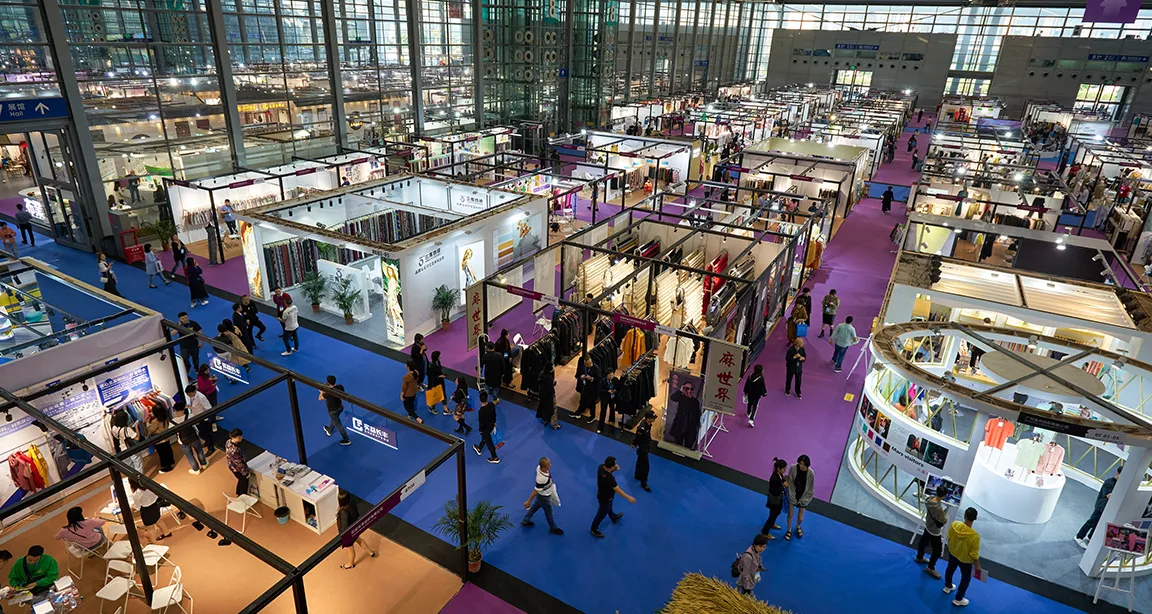
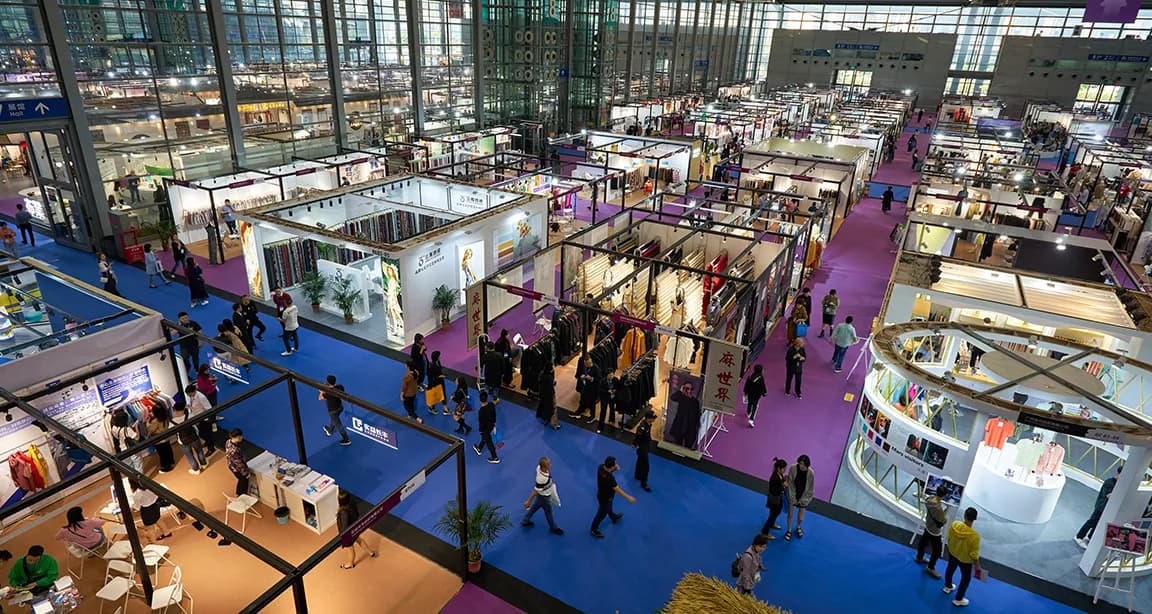
Headless WordPress and Next.js for 14 exhibitor portals
For an international trade fair organiser, a modern headless CMS architecture was implemented to manage multiple exhibitor portals more centrally, speed up editorial workflows and connect existing systems more reliably.
- Challenge
- Outdated CMS structures, manual updates and fragmented digital processes made it difficult to maintain several exhibitor portals. Content was hard to scale, the user experience was limited and the connection to CRM and booking processes was error-prone.
- Solution
- The solution combined Headless WordPress with a performant Next.js frontend. A .NET backend, Microsoft Dynamics CRM and a dynamic booking system were also integrated. This created a central CMS and portal structure for 14 exhibitor portals.
- Result
- The new architecture reduced loading times to under one second, accelerated content updates by around 60 percent and lowered the bounce rate to about 30 percent. At the same time, scaling multiple portals became easier and CRM integration became significantly more reliable.

Contentful, React and Next.js for an automotive service portal
For a German top-10 insurer and a nationwide workshop chain, a future-proof online portal for automotive services was built. The focus was on appointment booking, service management, location-wide coordination and a flexible headless CMS.
- Challenge
- Two different business models had to be brought together in one shared digital platform. The solution needed to support fast content updates, consistent branding, intuitive UX and scalable structures for hundreds of workshops.
- Solution
- Contentful was connected as a headless CMS with a React and Next.js frontend. Reusable React components, a shared design system, structured content and documentation were created to support future development by internal and junior developers.
- Result
- The result was a modular automotive service platform with better editorial structure, reusable components and scalable multi-brand architecture. The solution supported both customer experience, internal efficiency and future extensibility.
How we build a headless CMS that connects content, editorial workflows and frontend delivery
A successful CMS Web Development project does not start with tool selection alone. The important question is how content, components, languages, roles, workflows and frontend delivery are structured. We plan CMS projects so your business CMS system remains maintainable, editor-friendly and technically scalable over time.
Clarify CMS goals, content and requirements
We start with your content, page types, editorial workflows, languages, existing systems and technical requirements. Together, we clarify whether a headless CMS such as Strapi, headless WordPress or another CMS system fits your project.
Deliverables- CMS target picture
- Requirements overview
- CMS recommendation
Develop content model and page structure
Before the CMS is implemented technically, we plan content types, components, page types and reusable modules. This prevents page chaos and creates a CMS structure that supports both editorial teams and development over time.
Deliverables- Content model
- Page structure
- Component logic
Plan multilingual setup, roles and workflows
Scalable CMS systems need languages, regions, approvals, roles and preview workflows to be considered early. Especially for international websites, this phase prevents unnecessary complexity later.
Deliverables- i18n structure
- Role model
- Workflow concept
Implement and integrate the headless CMS
We set up the CMS, build the required content structures and connect it with modern frontends such as Next.js. We focus on API structure, performance, SEO readiness and clean integration with existing systems.
Deliverables- CMS setup
- API delivery
- Frontend integration
Secure content migration, quality assurance and SEO structure
Existing content, media and metadata are moved into the new structure. At the same time, we review content quality, technical SEO basics, internal linking, performance and editorial usability.
Deliverables- Content migration
- SEO foundation
- Quality assurance
Support go-live, training and long-term CMS operations
After go-live, we support editorial teams, development and operations. This includes training, roles, security updates, hosting, monitoring and further development of your CMS system.
Deliverables- Go-live support
- Editorial onboarding
- CMS operations
Why Choose Prokodo for CMS Web Development?
As an experienced CMS web development agency, we create custom CMS solutions with Strapi, WordPress & Contentful for businesses of all sizes.
Why Work with prokodo?
- Specialized in headless CMS solutions with Strapi & Contentful.
- 15+ years of expertise in CMS website development.
- Custom CMS strategies designed for maximum scalability.
Conclusion – Future-Proof CMS Web Development
Whether it's a headless CMS with Strapi or Contentful or a powerful WordPress website, modern CMS systems empower businesses with efficient content management, scalability, and optimal performance across multiple digital channels.
With headless technologies like Strapi or Contentful, you can deliver content seamlessly via APIs, making it easy to integrate with web apps, mobile apps, or digital platforms. At the same time, WordPress remains a reliable solution for businesses looking for a user-friendly CMS with built-in functionality.
We guide you through every step of CMS web development – from planning to implementation and optimization. Our experts help you choose the best CMS system software to ensure long-term business success.
Your Benefits with a Professional CMS Solution:
- Greater flexibility with headless CMS and API-driven content management.
- Improved SEO performance through modern frontend frameworks like Next.js.
- Future-proof architecture with scalable cloud solutions on AWS & Google Cloud.
- Efficient content management with intuitive CMS interfaces.
Let’s build your CMS project together – contact us for a free consultation!