Strapi Agency for Headless CMS, Migration and Scalable Platforms
We plan, build and stabilize Strapi platforms with clear architecture, dedicated points of contact and measurable outcomes for editorial teams, development and operations.
Strapi check in minutes · Free · No registration
Trusted by clients across the DACH region
Selected projects from SaaS, insurance and events.




Frequently asked questions for teams looking for a Strapi agency
Answers on Strapi architecture, migration, timelines, cost and operations. Project-specific topics can be clarified in a 30-minute technical check, including an initial assessment.
What does a Strapi project cost?
Costs depend on scope, starting point and integration complexity. A typical entry point is an audit or architecture phase with a fixed price, followed by implementation in sprints or as an ongoing engagement.
When is Strapi the right choice?
Strapi is especially useful when you need flexible content modeling, multiple channels or markets, and strong control over CMS structure, roles, APIs and processes. It works well for modern headless setups with custom frontends and for Strapi with Next.js.
How fast can an MVP go live?
With a defined scope and existing designs, a realistic timeframe is 6 to 10 weeks. We start with structure, architecture and delivery foundations, then implement prioritized templates and functions first.
Do you support Strapi with Next.js?
Yes. We regularly connect Strapi with Next.js so editorial workflows, preview, publishing, SEO, performance and deployment work together cleanly. This combination is especially strong for scalable websites, platforms and headless CMS architectures. Learn more on our Next.js Agency page and in our guide to Strapi with Next.js.
Can you migrate existing CMS setups to Strapi?
Yes. We structure migrations so content, SEO signals, page types and workflows are transferred or improved in a controlled way. The goal is a plannable transition without unnecessary risk for editorial teams or operations. You can find more detail in our guide on Strapi migration.
How do you improve editorial workflows?
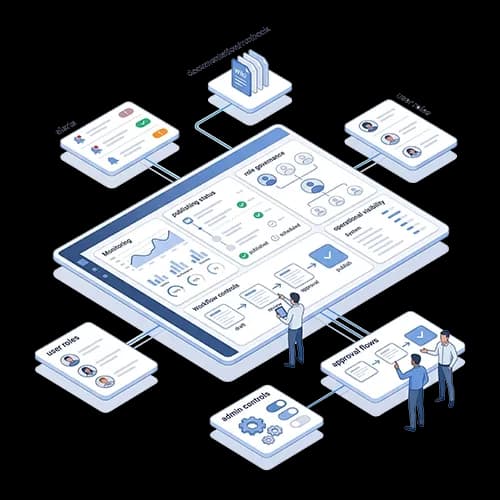
We work on content models, roles, component structures and governance. This creates more clarity around who maintains what, how content can be reused and how new content can go live without unnecessary friction.
Is Strapi suitable for multiple countries or brands?
Yes, if the structure is planned properly. We build Strapi so markets, languages, brands or page types can be managed and extended in a controlled way. For a deeper dive, see our guides on multilingual websites with Strapi and multi-site setups with Strapi.
Why Strapi instead of a traditional CMS?
Strapi is especially valuable when content needs to be used flexibly across multiple channels, markets or frontends. Compared to traditional CMS setups, Strapi gives more control over content models, APIs, roles and integrations. That is especially useful for headless CMS projects and for Strapi with Next.js. For a broader comparison, see our guide on Strapi or a traditional CMS.
Is Strapi suitable for companies with multiple teams or markets?
Yes. Strapi works well for platforms with multiple teams, markets, languages or page types when content models, roles and governance are structured cleanly. That gives growing headless CMS platforms more control and less operational friction.
How is success measured?
Shared KPIs depend on the target state and the starting point. Typical measures include faster editorial workflows, cleaner content structures, technical stability, stronger operational control and a more predictable path to go live.